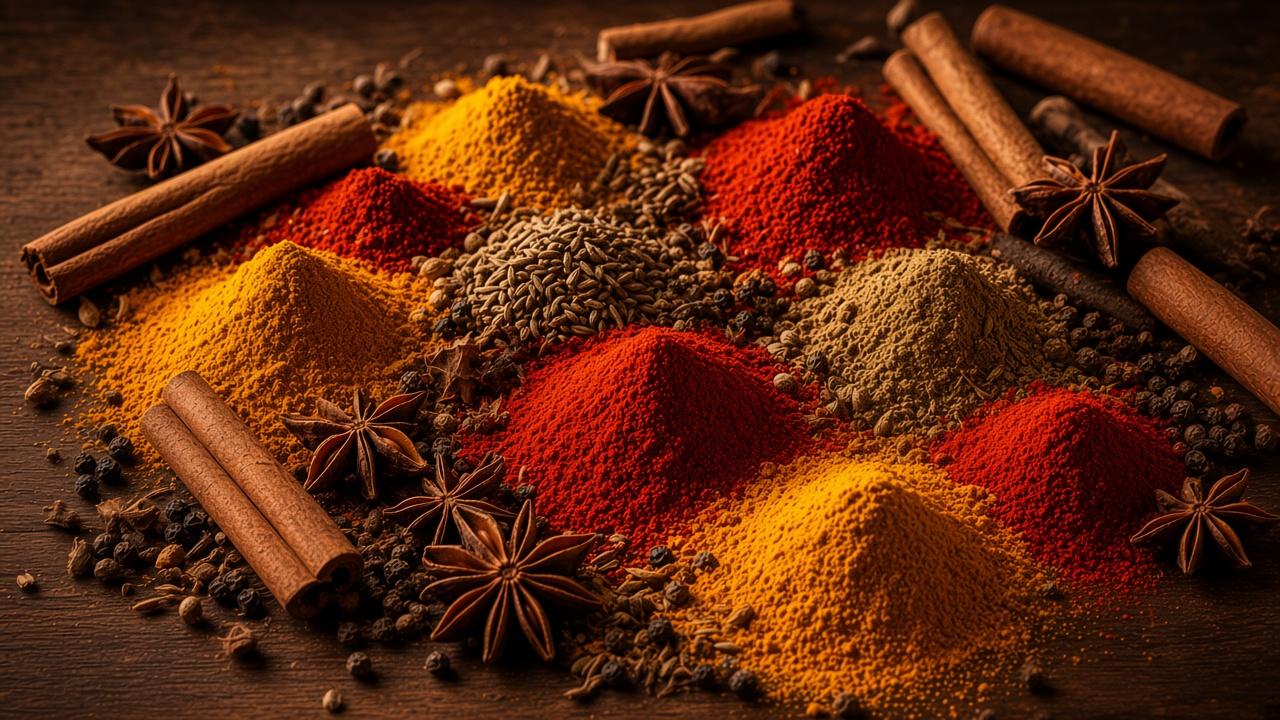
Spice guide / Cumin
What is Cumin?
Warm, earthy seed spice central to Indian tadka, rice, and masalas.
Short answer: Cumin (Hindi: जीरा) is Cuminum cyminum. Warm, earthy, nutty, slightly bitter. Culinary use only — not a medicine.
| Common name | Cumin |
|---|---|
| Hindi | जीरा |
| Sanskrit | Jiraka |
| Botanical name | Cuminum cyminum |
| Family | Apiaceae |
| Origin | India (widely cultivated; historically associated with the Eastern Mediterranean and South Asia) |
| Main producing regions | Rajasthan, Gujarat, Uttar Pradesh |
| Flavour | Warm, earthy, nutty, slightly bitter |
| Aroma | Strong, warm, penetrating |
| Forms | seeds, whole, powder, roasted |
| Retail packs | 100g–5kg (typical; see products) |
| Bulk | 10kg+ |
What is Cumin?
Cumin (Cuminum cyminum) is a small ridged seed used whole or ground. Indian production is concentrated in western growing belts, including Gujarat and Rajasthan. Flavour is warm, earthy and slightly bitter-nutty. Traditional culinary and wellness uses exist in South Asian cooking; those traditions are not medical claims.
History of Cumin
Cumin has been traded for centuries across West, Central and South Asia. In Indian kitchens it is a foundational tempering spice rather than a garnish.
Origin
India (widely cultivated; historically associated with the Eastern Mediterranean and South Asia) — Rajasthan, Gujarat
Growing regions
Rajasthan, Gujarat, Uttar Pradesh
How it is grown
Grown as a cool-season crop. Exact agronomy varies by district and irrigation.
Harvest
Typically harvested in late winter to early spring in major Indian belts (season varies by year).
Processing
Dried, cleaned (including machine or sortex cleaning where specified), then packed whole or milled.
Grades
- Standard: Admin-configured commercial grade
- Premium: Admin-configured higher visual/purity selection
- Export Grade: Only show when export specifications exist for the lot
- Machine Cleaned: Machine cleaned — confirm process for the lot
Only grades that apply to a lot should be shown at purchase. These are templates, not invented industry certificates.
Flavour, aroma and colour
Warm, earthy, nutty, slightly bitter. Strong, warm, penetrating. Colour: Greenish-brown to brown seeds; tan powder. Heat: none.
Whole vs ground
Cumin is sold whole (or as seed/leaf) and as a ground form. Whole keeps aroma longer in a UK cupboard; grind or crush just before cooking when you can. Powder is convenient for daily dal, curry and marinades — buy a pack you will finish in a few months.
Culinary uses
- Biryani
- Jeera rice
- Dal tadka
- Curry
- Raita
- Pickle
Traditional uses
Cumin has a long history of use in traditional culinary and wellness practices. Traditional use is not the same as scientifically established medical evidence.
SpicyCenter does not claim that spices cure, treat or prevent disease.
Storage and shelf life
Airtight, cool, dry, dark. Ground cumin loses aroma faster than whole seed. Whole seed typically keeps aroma longer than powder; follow pack best-before.
Nutrition
Nutrition declaration is lot- and pack-specific and must be completed before UK/EU sale.
Buying guide
Retail packs typically run from 100g to 5kg. Bulk starts at 10kg. Selling prices are checkout prices. Indian market figures, when present, are indicative only.
Indicative Indian market price
No dated market print has been imported yet. Admin must enter min/max/average with market, grade, date and source.
Indicative Indian market prices must be imported or entered with date, market, grade and source. Empty values are intentional so the site does not fabricate today's rates.
Market prices →FAQs
What is cumin?
Cumin is the dried seed of Cuminum cyminum, known as jeera in Hindi, used whole or ground in Indian cooking.
Where does Indian cumin come from?
Major Indian production includes Gujarat (notably Unjha market trade) and Rajasthan. Origin on a pack must match the actual lot.
Can I buy 25kg cumin?
Yes. Bulk cumin starts at a 10kg minimum. 25kg is a standard wholesale pack size; request a quote for custom quantities.
Recipes using this spice
- Jeera rice — Basmati tempered with cumin seeds — the weeknight rice that shows why whole jeera beats dusty powder.
- Dal tadka — Yellow lentils finished with a hot cumin, chilli and hing tempering.
- Hyderabadi-style vegetable biryani (home method) — Layered rice with whole garam spices; household recipes vary by region — this is a culinary overview.
- Everyday Indian curry base — Cumin, coriander, turmeric and Kashmiri chilli as a starting masala for vegetables or chicken.
- Tomato rasam — Pepper-cumin rasam — thin, sour, and meant to be sipped with rice.
- Chana masala — Chickpeas in a sour-spiced gravy — amchur and chole masala do the work.
- Rajma — Kidney beans in a slow tomato-onion gravy.
- Palak paneer — Spinach gravy finished with kasuri methi and garam masala.